News|Articles|May 28, 2026
Home hospital study shows strong results with Medicaid patients
Author(s)Ron Southwick
Researchers find low mortality and readmissions. Dr. David Levine of Mass General Brigham says the study answers an important question about home hospital programs for patients with lower incomes.
Advertisement
Researchers have examined
Mass General Brigham and UMass Chan Medical School researchers studied Medicaid patients in hospital-at-home programs and found encouraging results.
In a study of about 1,000 patients who use Medicaid, researchers found low mortality rates and low rates of readmission to a brick-and-mortar hospital. The
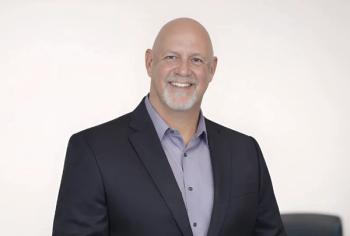
Dr. David Levine, lead author of the study and the clinical director of research & development at Healthcare at Home at Mass General Brigham Healthcare at Home, says that the study is significant in answering another important question about the safety and quality of home hospital programs.
He tells Chief Healthcare Executive® that he’s excited about the good results for Medicaid patients getting acute care in the home.
“We haven't been able to show in this big of a cohort of patients with Medicaid their outcomes before,” Levine says. “And I think there have been people around the country that have questioned whether folks that are unfortunately living in poverty can have a very, very excellent outcome when they get their care at home.”
“And so it's a huge win, I think, for this care model to show that it can really treat everybody. Doesn't matter how rich or poor you are, the outcomes are actually quite good in this population as well,” he says.
Levine says that the study of Medicaid patients suggests that home hospital programs can offer a way to provide more equitable care for patients.
“This is a care model that can be delivered to all sorts of patients,” Levine says.
“It allows us to deliver care with a great sense of equity, which we know is often not the case in our brick-and-mortar hospitals,” he explains. “We know that folks who are from a lower income bracket or who live in rural areas don't have as good outcomes after hospitalization, but we don't see that difference here in home hospital.”
‘The secret sauce’
Researchers evaluated the outcomes for Medicaid patients in hospital-at-home programs at Mass General Brigham and UMass Memorial Medical Center. The mortality rate during the study was 1.2%.
Levine says he was encouraged by the fact that a small percentage of patients needing care at home needed to return to a brick-and-mortar hospital. About 9% of the home hospital patients ended up going back to a brick-and-mortar hospital, while 4% were discharged to a nursing home or some other type of post-acute facility.
Medicaid patients in brick-and-mortar hospitals tend to be at greater risk for readmission than other patients due to issues such as difficulty getting medications or problems with transportation to get to follow-up appointments. “Things fall apart, as a result,” Levine says.
But patients in home hospital programs can also get assistance with problems that can hinder their recovery or pose risks for other health concerns.
“Part of the secret sauce of being in the home and getting your acute care is that team can work with you right there,” Levine says. “The team can see that the cupboards are empty, the refrigerator is empty. The team can see that maybe you are in public housing and you have a broken window that needs to be fixed.”
“We can bring resources to you that never would have been visible in the brick-and-mortar hospital,” he adds.
About 15% of the patients in the Medicaid home hospital study were Black, which roughly matched other studies of home hospital programs. Almost 40% of the patients in the new study were Hispanic, well above other studies of acute care at home, Levine says. And he says that’s another encouraging finding to see good outcomes among Hispanic patients.
“I think again it shows that this is a care model that works for all, does not matter what your race or ethnicity is, does not matter what your income is,” Levine says. “We are still seeing really positive outcomes from this population.”
High levels of sickness
Researchers recently found good results in
In the latest study, patients in home hospital programs were dealing with serious conditions. The most common conditions among those patients were heart failure, septicemia, and respiratory infections.
The Medicaid patients had “quite a bit of burden of sickness,” Levine says. Some patients enrolled in Medicaid and Medicare had higher levels of sickness, but he says those patients still did well.
Levine stresses it’s important to recognize that the patients in the latest study were seriously ill and getting acute care in the home.
“This is home hospital care,” Levin says. “It's substitutive. It's care that normally would have been delivered in a brick-and-mortar setting, and we're instead delivering it in your home as a substitute to traditional hospitalization. That is a key thing, and I think that that bears out in our data.”
More health systems introduced home hospital programs during the COVID-19 pandemic. Under Medicare’s rules, health systems offering acute care at home must provide a minimum of two visits from nurses in the home each day, while doctors and specialists also check in virtually and are available around the clock. Typically, patients in home hospital programs must be within a relatively short distance of a physical hospital.
As of April 29, there were 365 home hospital programs operated by 137 health systems in 37 states, according to
In February, President Trump and Congress approved legislation
Now, Levine and other healthcare leaders say that they are enthusiastic that more health systems will start new programs or expand services.
“I think this is a very exciting time for home hospital,” Levine says. “Previously, totally understand the CFO conservatism of launching essentially an entire business line with an uncertain payment infrastructure in front of it, and we don't really have that problem anymore. We have a five-year extension right now. That's a really nice runway. We are, of course, hoping to find permanence after 2030, but right now we have a nice runway for a care model that has a lot of evidence base behind it.”
Advertisement
Related Content
Advertisement

















































Advertisement
Advertisement
Trending on Chief Healthcare Executive
1
Hospitals face greater demands for price transparency
2
Kidney failure is preventable. Kidney expertise belongs on the nation’s preventive care task force | Viewpoint
3
Fears for the future of Medicaid programs
4
After tragedy, hospitals should engage staff on improving safety
5