News|Videos|May 13, 2026
Helping emergency nurses at a hard time
Author(s)Ron Southwick
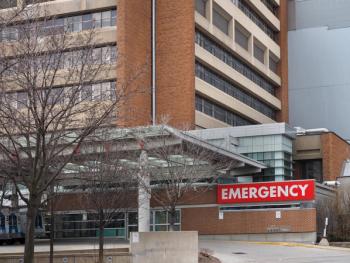
Dustin Bass, president of the Emergency Nurses Association, says he relishes his role at a time when nurses are facing a difficult job.
Advertisement
Dustin Bass is trying to make sure everyone understands the contributions and challenges of emergency nurses.
Bass serves as the 2026 president of the Emergency Nurses Association. He tells Chief Healthcare Executive® that there are “some really hard things” happening in emergency medicine.
Emergency nurses have never had it easy. But Bass says they are facing a tougher road in recent years.
“They're caring for higher acuity patients,” Bass says. “Our patients are sicker than they've ever been.”
Hospitals are also dealing with higher volumes of patients in the emergency department. Too many patients are staying in the emergency department for days, or longer, due to a lack of beds, as health systems struggle to find placement for patients who need to go to a rehabilitation facility, nursing home or other long-term care facility.
“We're managing crowding and boarding,” Bass says. “So that's a huge, I think, bottleneck within our healthcare system everywhere, where we're holding patients that need an inpatient bed. So we're holding those admits in the ED sometimes from 24 hours or greater. And you know, the safety of the patients really falls to the emergency nurse.”
Emergency nurses endure a great deal of stress, Bass says.
“I always say we're the last stop a lot of times before something actually gets to the patient, before medicine gets to the patient … the patient goes for their procedure. The ER nurse is the last stop there. And so I think that that's a heavy burden sometimes,” he says.
Bass adds that the far-too-regular threat of hospital violence also adds to the risks of burnout for nurses.
Violence in emergency departments is “a major problem,” Bass says. “I think that we're talking about it more, which is great, but … violence can't be normalized as part of the job.”
Hospitals also need to support their nurses by pushing authorities to press charges when their nurses are attacked.
Bass encourages emergency nurses to help each other when they are feeling stressed and overwhelmed. But he also says it’s important for nurses to recognize when they need a break and it’s time to focus on self-care.
Health systems can help nurses by encouraging them to take advantage of counseling through employee assistance programs. He also says health systems can give nurses a boost by allowing them to pursue networking opportunities out of work, so they can be rejuvenized.
“I think allowing opportunities like that for your team as well is really important,” Bass says.
And Bass stresses that nurses need to take their vacation, and not allow paid time off (PTO) to be left on the table.
“Take your PTO,” he says. “That's why you have it. Take your PTO. Take your time off, to spend time doing whatever it is that you love. I think that that's really important.”
Bass says he also uses affirmation cards, reading one each day. He says it’s been a useful tool to get in a positive mindset.
He says emergency nurses need to remember to give themselves some grace.
“We are really hard on ourselves in our head,” Bass says. “You talk to yourself in your head sometimes, and you're really hard on yourself, and sometimes we have to be gentle to ourselves and supportive and understanding whenever things don't go the way that we thought they were going to go.”
Advertisement
Related Content
Advertisement












































Advertisement
Advertisement
Trending on Chief Healthcare Executive
1
Hospitals face greater demands for price transparency
2
Kidney failure is preventable. Kidney expertise belongs on the nation’s preventive care task force | Viewpoint
3
Fears for the future of Medicaid programs
4
After tragedy, hospitals should engage staff on improving safety
5