
News|Articles|April 6, 2026
Heidi aims to go beyond the AI scribe
Author(s)Ron Southwick

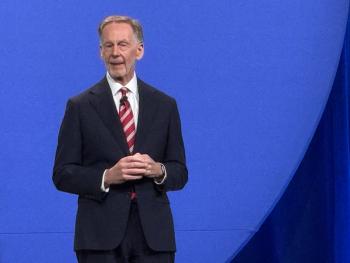
Simon Kos, the company’s global chief medical officer, spoke with Chief Healthcare Executive about teaming with R1, the revenue cycle company, and Heidi Evidence.
Advertisement
Heidi, the health technology firm, is known for its AI scribe.The company says its AI-powered documentation tool for doctors is used in more than 2.7 million patient visits each week globally.
But Dr. Simon Kos, Heidi’s global chief medical officer, says the company is aiming to do more.
“If the mission is truly to return capacity to healthcare, it's got to go well beyond a scribe,” Kos says.
Heidi has been taking steps to expand. Last month, the tech firm founded in Australia announced a partnership with R1, a revenue cycle management company.
Recently, Heidi also launched Heidi Evidence, a tool allowing doctors to see the latest research. Heidi also pledged to differentiate from other competitors by saying Heidi Evidence won’t include outside advertisements.
In a conversation at the HIMSS Global Health Conference & Exhibition in Las Vegas last month, Kos talked with Chief Healthcare Executive® about Heidi’s new ventures with R1 and Heidi Evidence.
Faster revenue cycle
Heidi’s partnership with R1 brings new opportunities, Kos says.
The companies will combine R1’s billing and reimbursement technology with Heidi’s ambient documentation, and Kos says the two companies can complement each other’s strengths. He says the partnership with R1 creates a “unified intelligence layer.”
The partnership should also pay dividends for health systems and hospitals, he says.
“What that practically means for organizations is they're going to move through their revenue cycle a whole lot faster,” Kos says.
With linking the AI documentation to R1’s revenue cycle capabilities, Kos says organizations will reduce the risk of “under-coding.”
“It's widespread, because physicians are cautious of actually going too close to the line, because of the penalties for over-coding …. that's financial fraud,” he says. “So no one wants to be in that bucket. So the caution, the conservatism, is resulting in under-coding and organizations know that. So that's where AI comes in.”
Kos says the partnership should reduce the risk of over-coding as well.
“An AI documentation tool is going to help you make the right decision there, show you what's justifiable given the documentation in the evidence,” he says.
Ad-free evidence
The company garnered attention with the launch of Heidi Evidence, an AI tool that helps clinicians find the latest information in medical journals.
Heidi also pledged that it will not run ads with Heidi Evidence. Some other similar solutions include ads, which has raised concerns that recommendations may be tied to sponsors behind the advertisements.
In launching Heidi Evidence, Thomas Kelly, Heidi’s co-founder, said in a
on LinkedIn, “No ads. No hidden influence. Every answer is transparent, with quoted citations and sources that you can check yourself.”
Kos calls it a “principled decision.”
“You can actually see the quality and reliability of that evidence,” Kos says. “Click through to be able to actually not just see the citation, but get to that article itself.”
Kos says foregoing ads does mean passing up on revenue, but he says the company also sees a bigger picture.
“The mission of Heidi is to double the world's healthcare capacity, and achieving that mission, we will do it profitably,” he says. “But there's also a driving force of, how do we become a change agent for good in the world?”
The philosophy has led to some “anti-commerical decisions,” Kos says.
He points to Heidi’s free tier, which is available to all. The paid version of Heidi offers more features, he says. But he points to the free version of Heidi and Heidi Evidence as examples of the company’s bigger vision.
“That ability to be accessible and equitable and lead to outcomes like improved capacity in our healthcare systems around the globe, that's actually really important,” he says.
Heidi also sees some advantages in going ad-free with its evidence product. Kos says that helps avoid additional scrutiny in some countries with stringent regulators.
“That results in a product that we hope clinicians will trust,” he says.
Kos also sees the potential for the partnership with R1 to help health systems avoid some of the hassles involved in securing authorization from insurance companies for treatment. Heidi Evidence can help systems understand what's compliant from a billing perspective, and that could potentially reduce delays and denials.
“We have all the clinical information, but R1 has the financial information,” Kos says. “If you can unify the clinical information and the financial information, you can do some really interesting things.”
Advertisement








































Advertisement
Advertisement