
News|Articles|August 3, 2026
Chief Healthcare Executive Roundtable: How AI is changing hospitals
Author(s)Ron Southwick
Key Takeaways
- Post-discharge AI voice outreach within 72 hours can stratify readmission risk, trigger clinical interventions, and improve patient experience while supporting measurable reductions in readmissions.
- Infusion center AI scheduling has delivered ~10–15% efficiency gains over six months, indicating near-term operational value in oncology service lines.
Our panel of leaders talks about AI’s impact on patient experience, improving care and accelerating research.
Advertisement
Hospitals and health systems are moving from experimentation to implementation when it comes to AI.
During the Chief Healthcare Executive Roundtable, our panel of leaders assessed AI’s potential benefits and some of the benefits that are already emerging. In the latest video from the roundtable, executives talked about their hopes for AI.
These leaders participated in our roundtable.
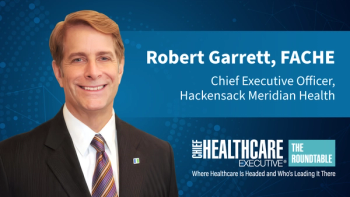
Robert Garrett, CEO, Hackensack Meridian Health
Benjamin P. Levy, M.D., clinical director of medical oncology, Johns Hopkins Sidney Kimmel Cancer Center
Kevin Beiner, chief operating officer, Northwell Health
Deepak L. Bhatt, M.D., M.P.H., M.B.A, director, Mount Sinai Fuster Heart Hospital, Icahn School of Medicine
Stephanie Wierwille, moderator; EVP, strategy and innovation, BPD
Check out the video for the full discussion. Here are some highlights from the conversation on AI and the places where AI is paying dividends.
Agents engaging patients
Hackensack Meridian has been utilizing an AI voice agent, “Erin,” which helps connect with patients. The agent calls patients within 72 hours of discharge, and is credited with reducing readmissions, Garrett says.
After an initial testing period, Erin is being deployed throughout the system.
“From the patient's perspective, their experience with these discharge calls is much more positive. It has real clinical implications, because it has helped reduce readmissions: it identifies hot spots, a patient who's at higher risk for an unnecessary readmission, and then alerts the clinical team, which interacts,” Garrett says.
The system has assembled a multidisciplinary team, including doctors, nurses and other staff, to help guide uses of AI.
Rethinking cancer
Levy points to the use of AI to improve efficiency in scheduling patients for infusion sessions.
“That has improved the efficiency of our infusion center on the order of 10 to 15% over the past six months,” Levy says.
Johns Hopkins is using AI to flag patient records and identify patients that are eligible for promising clinical trials, Levy says.
Levy expressed enthusiasm for AI helping spur more breakthroughs in cancer.
“AI is clearly changing how we think about cancer, how we think about tumors and the genetic underpinnings of tumors, and what we look at in deciding which therapies are available,” Levy says.
“We have challenges with AI, and we talk about how careful we need to be, but it is truly impacting the science in real time as well,” he says.
Testing and triaging
At Northwell Health, the use of AI is still in the early days, Beiner says. The system has created an “internal sandbox” of various AI tools so clinicians can test different solutions.
Northwell has been using AI-powered ambient documentation tools that record patient conversations and quickly generate summaries of the conversations.
“We're doing things like ambient listening and a lot of time savers for physicians and nurses in the practices, but the reality is it's early for us,” Beiner says. “We're seeing a lot come down the pike, mostly through our docs, who are intrigued by things they see in the market, and right now it's about triaging and deciding how we react or don't to certain things, because there's a lot of noise.”
You can see all of the videos from our series on
The videos are free to watch, but you will be asked to fill out some information to access them. Join the conversation.
Advertisement
Related Content
Advertisement













































Advertisement
Advertisement
Trending on Chief Healthcare Executive
1
CMS releases final 2027 hospital inpatient payment rule: Questions and answers
2
Chief Healthcare Executive Roundtable: How AI is changing hospitals
3
Cost of breaches: Healthcare still leads all sectors, and AI is used in more attacks
4
After some turbulence, CDC nominee nears Senate approval: Questions and answers
5