A Deloitte report estimates significant new investments, and says interventions could add 20 years to women’s health span.

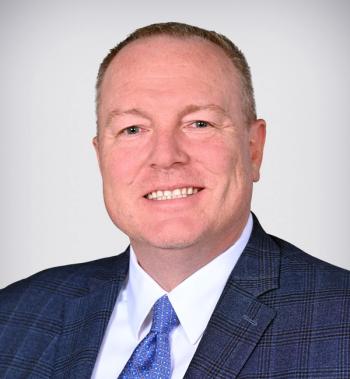
Heather O’Sullivan, president of Healthcare at Home at Mass General Brigham, talks with Chief Healthcare Executive about the outlook for home hospital programs.
Las Vegas - Heather O’Sullivan doesn’t mince words when asked about her assessment of the prospects of
“It’s absolutely the future of health care,” O’Sullivan, president and chief operating officer of Mass General Brigham’s Healthcare at Home, tells Chief Healthcare Executive®.
In an interview at the HIMSS Global Health Conference & Exhibition, O’Sullivan cites a number of reasons, including “clinician satisfaction, patient satisfaction, workforce retention, and honestly an option for lower cost of care, and better care.”
The future for home hospital programs is certainly more upbeat than it has been in a long time. Last month, Congress and the White House
For more than a year, Congress approved short-term extensions for telehealth and home hospital programs. With the partial government shutdown last fall,
With Washington taking that step, O’Sullivan says it’s more likely that health systems will introduce new hospital-at-home programs or expand existing programs.
When the news broke that lawmakers agreed to extend approvals for hospital-at-home programs, O’Sullivan says it took a while for her to believe it.
“I don't think that we were expecting that much time to process what we had achieved together and what that could bring, as far as value, not only to Mass General Brigham, but for the rest of the country,” she says. “So it took about a day or two to really settle in.”
Kyle Zebley, CEO of the American Telemedicine Association, tells Chief Healthcare Executive in an interview at HIMSS that he’s heard more hospitals and health systems looking at starting hospital-at-home programs with the extension of the waivers.
“I think acute hospital care at home is going to finally be around long enough to actually have more systems to adopt and move in that direction,” he says.
Heightened interest
Mass General Brigham established one of the first hospital-at-home programs in the nation. Home hospital programs expanded during the COVID-19 pandemic, as health systems looked to offer some care for patients at home as they grappled with a high volume of patients.
Since the extension of federal waivers for home hospital programs, O’Sullivan says she has had a number of conversations from leaders of other health systems seeking guidance as they look to launch programs. She says she’s getting multiple calls a week.
“We are receiving inquiries, requests to learn from our experience,” she says. “I think that there was a lot of pent up desire for home hospital. And I've heard in some instances, up to 40% of hospital system leaders are either thinking about or have already executed their strategy on healthcare at home, and specifically home hospital, and now they have the durable runway and the reassurance and the certainty, both from our regulatory as well as from a reimbursement perspective.”
Under federal guidelines for hospital-at-home programs, nurses must visit patients in person twice a day. Doctors and other clinicians also see patients virtually as well.
As of Feb. 10, 366 hospital-at-home programs are operating in 37 states, according to
O’Sullivan says at least 10% of patients being treated in brick-and-mortar hospitals - at Mass General Brigham and around the nation - could be treated in home hospital programs. She says that number could well be higher.
“It's honestly to decant the secondary level of care for patients that really don't require that brick-and-mortar sophistication,” she says. “Today and currently, it's a great option for patients or family members in choosing to receive care in a different manner.”
Health systems looking to develop hospital-at-home programs should have a clear sense of purpose, she says.
At Mass General Brigham, O’Sullivan says, “We continue to be continuously in a crisis around capacity and access to care.”
But other hospitals may have different motivations, including dealing with challenging geography or offering access in rural communities.
“Once the hospital has clarity on the why, you can build the ROI around that to justify why it makes sense to build a model for that particular institution,” she says.
Addressing misconceptions
Some misconceptions about hospital-at-home programs continue to persist, O’Sullivan says. Perhaps the biggest is that home hospital programs don’t make sense financially.
O’Sullivan says there are financial advantages to providing acute care at home. Health systems can gain more revenue by moving eligible patients home, freeing up more beds for those who truly need to be in the hospital.
“Hospital-at-home opens up new revenue streams through new capacity opportunities,” she says.
She also says too many people don’t understand the difference between hospital-at-home programs and home care programs. While home healthcare offers important assistance to some people, those in hospital-at-home programs are receiving acute care, she says.
“With traditional home health, you don't have the durable medical equipment, the food, the medicine, the oxygen, you don't have the providers in the home,” O’Sullivan says. “That's what you have, and then so much more, with home hospital.”
O’Sullivan says she’s encouraged by the strong results seen in home hospital programs.
“The results are similar: lower readmission rate, increased mobility, lower mortality, increased patient satisfaction, increased workforce satisfaction,” she says. “This is why it's going to be a model …not only of today, but absolutely in the future.”
Looking ahead, Mass General Brigham aims to expand its own program, offering more acute care at home for post-operative patients, behavioral health, and cancer.
With expanding acute care at home in oncology, O’Sullivan says the health system will take “baby steps.” She says she doesn’t envision delivering chemotherapeutic agents at home in the near future.
But she sees ways to offer more acute care at home for patients with cancer.
“We really see a tremendous amount of oncologic patients,” she says. “We call them, medical oncology patients, that need supportive care throughout their oncologic treatment, whether it be for dehydration or other issues. Those patients really are the ideal patients for us to care for in the privacy and comfort of their own home.”